
By Herman Duarte, MSc. & LL.M.
Founder, Simple Legal Consulting
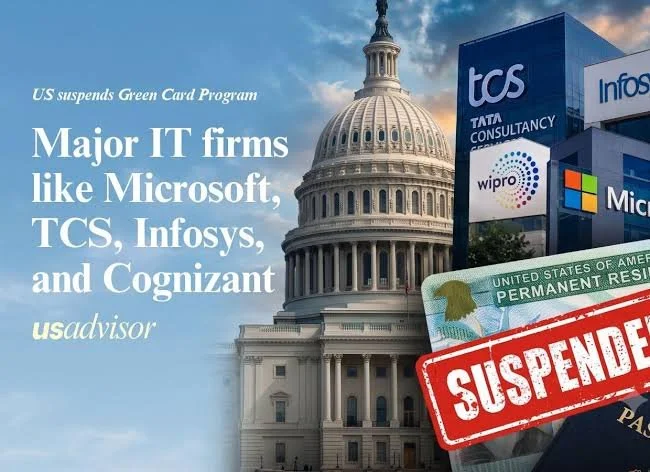
The U.S. Department of Labor’s October 8 announcement suspending Microsoft, Adobe, Cognizant, Infosys, Tata Consultancy Services (TCS), Wipro, HCL Technologies and Capgemini from the Permanent Labor Certification Program, known as PERM, has raised questions about immigration planning and talent retention.
For employers and international professionals evaluating alternatives, Costa Rica’s Digital Nomad Visa Programdeserves consideration. Eligible employees can establish a temporary legal base in Costa Rica while continuing to work remotely for their employer abroad.
This can offer a practical option for Indian software engineers, developers and other technical specialists whose roles can be performed internationally.
What the PERM suspension means for employers and employees
PERM is a labor certification process used in many employer-sponsored applications for U.S. permanent residence. The announced suspension concerns the acceptance of new applications and processing of pending applications involving the named companies.
It does not automatically cancel every affected employee’s H-1B status or require everyone to leave the United States.
The business concern is longer-term uncertainty. Employees may reconsider their future, and employers may need contingency plans to retain people whose skills are essential to ongoing projects.
Relocation should therefore follow an individual assessment of the employee’s immigration position, personal objectives and ability to perform the role from another country.
Are Indian nationals being targeted?
The publicly described measure applies to named employers. It has not been presented as a nationality-based exclusion limited to Indian citizens.
Indian professionals nevertheless have particular reason to follow these developments. U.S. immigration data show that approximately 71% of approved H-1B petitions in fiscal year 2024 concerned beneficiaries born in India. This is a systemwide statistic, not a count of employees affected by these suspensions.
Chinese professionals and employees of other nationalities may also face disruption where their green card plans depend on a suspended employer’s PERM application.
For Costa Rican relocation planning, the relevant questions are the employee’s eligibility, passport, existing immigration documents and proposed working arrangements.
How Costa Rica’s Digital Nomad Visa can support technical employees
Costa Rica’s program accommodates eligible professionals who provide services remotely to an employer or client outside Costa Rica.
For example, an Indian software engineer working for a U.S. company could apply to live in Costa Rica while continuing to serve that foreign employer, provided the employee qualifies and the company approves the arrangement.
This creates an opportunity to preserve the employment relationship, retain institutional knowledge and maintain project continuity.
The program provides an initial stay of up to one year, with the possibility of one additional year, subject to renewal requirements. Its legal classification is a temporary stay under the nonresident category.
Eligibility depends on the applicant’s previous income
The principal applicant’s documented income during the previous 12 months is central to eligibility.
The required qualifying foreign income is:
US$3,000 per month for an individual applicant.
US$4,000 per month when applying with eligible dependents.
The assessment concerns the income history of the passport holder applying as the principal beneficiary. A future employment offer or proposed salary does not, by itself, establish the required history.
Applicants also need the required passport and application documents, translations where applicable, and medical insurance covering the authorized stay. The insurance must provide at least US$50,000 in medical expense coverage, and accompanying dependents must also be covered.
Costa Rica entry requirements for Indian passport holders
Indian nationals generally require a Costa Rican consular visa unless they qualify for an exemption.
A valid, multiple-entry U.S. visa can provide such an exemption. This can include a qualifying B1/B2 tourist and business visa. The visa must satisfy the conditions applicable when the person travels.
An employee should have the actual travel document reviewed before departure. Lawful status in the United States and possession of a valid visa for international travel are distinct matters.
Other qualifying visas or residence documents may also support an exemption, depending on the applicable rules.
If no exemption applies, Simple Legal Consulting can assist with a Costa Rican tourist visa application through the appropriate Costa Rican consulate in the applicant’s country of nationality or lawful residence, subject to consular jurisdiction.
The entry visa and the digital nomad authorization serve different purposes. Both should be addressed in the relocation plan.
Can an employee relocate in approximately two months?
For a suitable applicant with complete documents and straightforward entry arrangements, approximately two months can be a planning target, subject to an initial assessment.
The schedule depends on immigration processing, any requests for additional information and completion of the required formalities. A separate consular visa application may extend the overall timeline.
Employers should establish the target date after reviewing the employee’s income evidence, passport, entry eligibility and family applications.
What employers should assess before approving relocation
The immigration pathway should fit the proposed working arrangement. A company should review the employee’s duties, international remote-work policy, payroll, tax exposure, employment obligations, client contracts and data-security requirements.
A position involving employment by a Costa Rican entity or services to the local market requires a separate analysis.
Similarly, a move should be coordinated with U.S. immigration counsel where the employee has pending applications or future plans to return to the United States.
For suitable roles, these assessments can produce a practical retention plan: the employee continues contributing from Costa Rica while the company preserves valuable expertise.
Plan your team’s relocation with Simple Legal Consulting
Simple Legal Consulting assists employers and international professionals with eligibility assessments, income documentation, entry requirements, digital nomad applications and arrangements for eligible dependents.
For companies considering alternatives following the PERM suspensions, the starting point is an employee-by-employee assessment of who qualifies and how relocation would work.
Contact Simple Legal Consulting to evaluate Costa Rica’s Digital Nomad Visa Program for your technical team and develop a realistic relocation timeline.