
Premium Legal Representation for Passive Income (Rentista) Residency in Costa Rica
Costa Rica’s Rentista Residency is one of the most attractive immigration options for foreign nationals who want to live in Costa Rica without needing to work locally, retire formally, or immediately invest in real estate.
This category is designed for individuals and families who can demonstrate stable financial means, usually through guaranteed monthly income of at least USD $2,500 for a period of two years, or through a properly structured financial arrangement that satisfies the immigration authority’s expectations. The legal framework for temporary residency categories, including Rentista residency, is governed by Costa Rica’s immigration regime under Law No. 8764 and its regulations.
At Simple Legal Consulting, we assist foreign individuals, families, investors, entrepreneurs, and private clients who want to relocate to Costa Rica through a clean, strategic, and professionally managed Rentista application.
Our work is not limited to filling out forms. We structure the file, review the financial evidence, coordinate banking and accounting support when needed, prepare the immigration application, organize apostilles and translations, and guide the client until approval and DIMEX issuance.
How much time it takes? Around 6-10 months to get an approval.
Applicants who file before July 5, 2026 may still preserve access to benefits under Law No. 9996, even if the final resolution is issued after the deadline.

Every Rentista application is personally supervised by Herman Duarte, founder of Simple Legal Consulting, to ensure a carefully structured and professionally prepared filing.
Boutique legal representation for residency, investment, banking, corporate, and real estate matters in Costa Rica.
What Is Costa Rica Rentista Residency?
Rentista Residency is a temporary residence category for foreign nationals who can prove stable financial means to support themselves while living in Costa Rica.
In practical terms, the category is commonly associated with proving at least USD $2,500 per month for a period of two years, or a properly structured financial arrangement equivalent to that requirement.
This category is especially useful for people who have passive income, investment income, savings, rental income, dividends, or other documented resources that allow them to live in Costa Rica without depending on local employment.
Simple Legal Consulting helps clients determine whether Rentista is the right category and how to present the financial evidence correctly.
Who Should Consider Rentista Residency?
Important Considerations For Rentista Residency
Rentista Residency may be a good fit for foreign nationals who want a serious long-term residency path but are not ready, or not required, to apply as investors or pensioners.
It is often suitable for:
Passive Income Applicants: This includes people who receive income from rental properties, dividends, investments, annuities, trust distributions, or other stable sources outside Costa Rica.
Families Relocating to Costa Rica: A principal applicant may qualify financially while a spouse and children apply as dependents. Each family member still requires proper documentation, apostilles, translations, and individual immigration review.
Investors Who Want Flexibility: Some clients plan to buy property later, but do not want to rush into a purchase only to qualify for residency. Rentista may allow them to begin the residency process while they evaluate real estate, lifestyle, schools, and banking options. We recommend our clients to read our practical guide for property purchases in Costa Rica.
Remote Professionals and Private Clients: Rentista can also be useful for people with foreign-source income who want a more traditional residency route than the Digital Nomad Visa.
Private clients that want to invest capital in a Costa Rican bank: Rentista Residency can also be attractive for private clients who want to place capital in a Costa Rican bank as part of a broader relocation or financial planning strategy. In these cases, the legal work must be especially careful because the banking file, source-of-funds documentation, accountant certification, and immigration application should all tell a consistent and verifiable story.
If you need to open a bank account, we have strong commercial relations and can help you open an account in 3 days or less.
-
Stage 1: Eligibility Review
We begin with a legal review of your profile.We evaluate:
Your nationality.
Your current immigration status.
Your income source.
Your banking situation.
Your family structure.
Your timeline.
Whether Rentista is the best category.
Whether Investor, Pensionado, Digital Nomad, or another category may be better.
This step avoids the most common mistake: choosing a category based on internet summaries instead of legal strategy.
Stage 2: Financial Strategy
We review how you will prove the Rentista requirement.
This may involve:
Passive income review.
Bank deposit strategy.
Bank account opening.
Source-of-funds review.
Accountant certification.
Supporting documentation.
Risk analysis.
The goal is to create a financial story that is simple, consistent, and verifiable.
Stage 3: Document Collection
We prepare a document checklist for each applicant.
This includes:
Principal applicant checklist.
Spouse checklist.
Children checklist.
Apostille instructions.
Translation requirements.
Costa Rica appointment requirements.
Banking and accounting documents.
Stage 4: Legal Review
Before filing, we review the documents carefully.
This includes:
Names.
Dates.
Apostilles.
Expiration dates.
Translation accuracy.
Income consistency.
Passport data.
Family relationships.
Criminal background check validity.
Government fee receipts.
A single inconsistency can delay the file.
Stage 5: Filing Before Immigration
Once the file is complete, the application is filed before the Costa Rican immigration authority.
We monitor the file, respond to notices, and guide the client through any additional requirements.
Stage 6: Approval Resolution
If approved, the immigration authority issues a resolution granting temporary residence.
The approval is not the final step. After approval, the applicant must complete post-approval requirements to obtain the DIMEX card.
Stage 7: DIMEX Card
The DIMEX is the physical immigration identification card.
The Costa Rican immigration authority has official procedures and requirements for DIMEX documentation and renewal processes. The official immigration website includes DIMEX information for temporary residents, including Rentista residents and dependents.
Post-approval steps may include:
Government payments.
Guarantee deposit.
CAJA or insurance-related requirements, depending on category and current policy.
Appointment scheduling.
DIMEX issuance.
-
Costa Rica has offered important fiscal benefits for certain categories of foreign residents, including investors, pensionados, and rentistas, through Law No. 9996 and related regulations. The immigration authority has published regulatory materials related to Law No. 9996 and the attraction of investors, rentistas, and pensionados.
This matters because some benefits and transitional rules may depend on timing, filing date, eligibility, and category.
For clients considering Rentista Residency, 2026 is not a year to improvise. If you are planning to relocate, import personal goods, structure funds, purchase a vehicle, or coordinate a family move, timing should be reviewed early.
A rushed application is usually more expensive than a planned application.
The strongest strategy is to begin with:
Legal eligibility.
Banking feasibility.
Document timeline.
Family filing structure.
Post-approval planning.
Benefits analysis.
-
This is important.
Rentista Residency is not a local employment permit.
A Rentista resident should not assume that they can freely work as a salaried employee in Costa Rica. The category is based on financial independence, not local labor market participation.
Generally, Rentista residents may own companies, receive dividends, or manage private investments, but local employment and remunerated work in Costa Rica must be reviewed carefully.
This distinction matters because immigration compliance is not just about getting approved. It is also about preserving status after approval.
-
Mistake 1: Treating the Requirement as “Just USD $60,000”
The issue is not only the amount. The issue is documentation, source of funds, bank acceptance, and legal coherence.
Mistake 2: Filing With Weak Financial Evidence
If the bank letter, accountant certificate, bank statements, and supporting documents do not align, the file may be questioned.
Mistake 3: Using Expired Documents
Birth certificates, criminal records, and other documents may have validity requirements. Applicants often lose time because they collect documents too early or too late.
Mistake 4: Underestimating Apostilles
Foreign documents usually require apostilles or legalization. This can take time, especially when federal criminal background checks are involved.
Mistake 5: Poor Translations
A bad translation can create inconsistencies in names, dates, legal terminology, or document references.
Mistake 6: Assuming Dependents Are Simple Add-ons
Dependents require their own file review. Marriage certificates, birth certificates, criminal records, apostilles, translations, and forms must be handled correctly.
Mistake 7: Choosing the Wrong Category
Some clients should apply as Rentista. Others should apply as Pensionado, Investor, Digital Nomad, or under another category.
The right category depends on the facts.
Rentista vs. Investor Residency
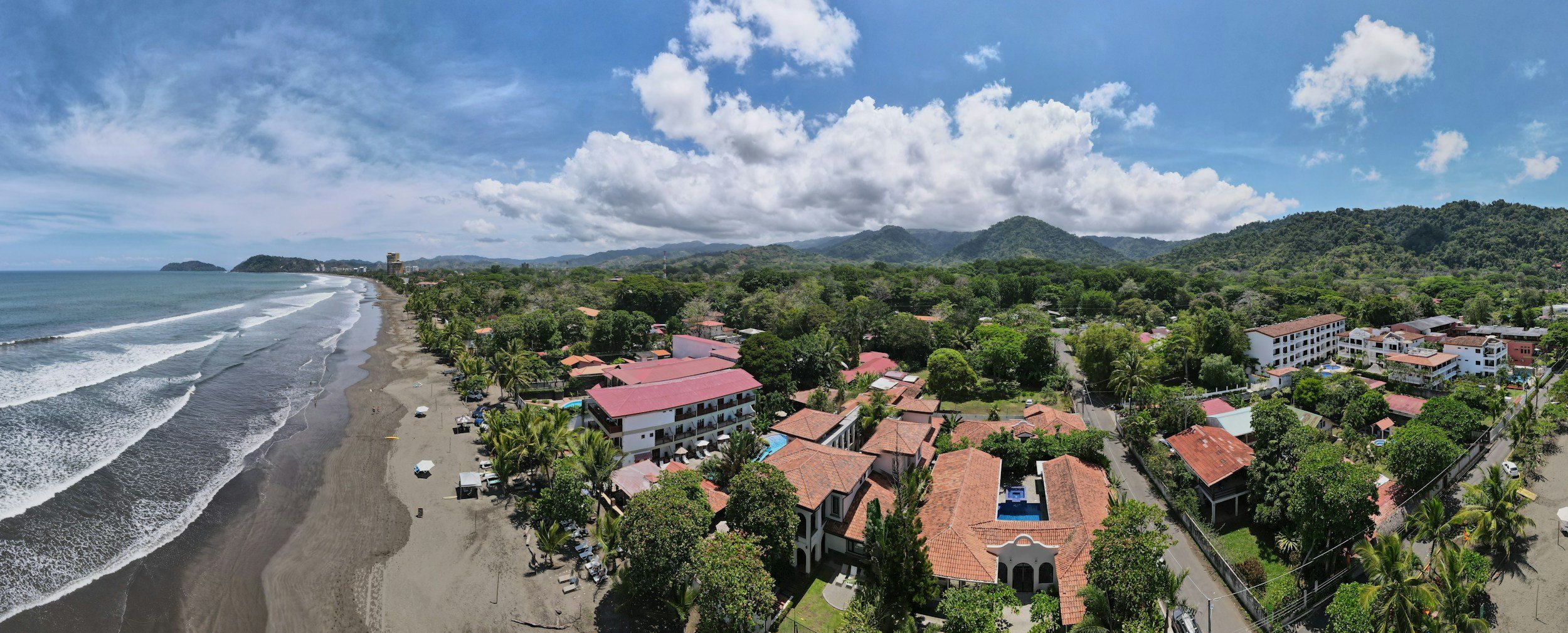
Many clients assume they must buy property to obtain residency in Costa Rica. That is not always the best strategy.
Investor Residency may be appropriate when a client already has a qualifying investment or is ready to invest immediately. However, if the client has stable financial means and wants more flexibility before purchasing property, Rentista Residency may be a cleaner and more practical path.
One important advantage is timing. Rentista applications can often be submitted through Trámite Ya, Costa Rica’s digital platform for immigration procedures. The platform is designed to allow users to complete procedures online through a secure and agile system, reducing the need for traditional in-person filing.
In our recent experience, well-prepared Rentista applications submitted online have received approval in less than 10 months on average, with some cases approved in approximately 5 months. Processing times always depend on the quality of the file, document readiness, government workload, and whether immigration requests additional information.
By contrast, Investor Residency can be slower in practice, especially when the file depends on hard-copy documentation, investment verification, and administrative review. Some current market references place general residency processing between several months and one year, while other Rentista-focused sources estimate six months to one year or longer depending on the case.
The key question is not simply:
Can I qualify?
The better question is:
Which residency category best protects my timeline, my money, and my long-term plans in Costa Rica?
A good immigration strategy should not force a rushed investment decision. For many clients, Rentista Residency allows them to begin the legal residency process while they continue evaluating where to live, whether to buy property, how to structure their banking, and when to make a larger investment in Costa Rica.

Why Work With Simple Legal Consulting?
Simple Legal Consulting is a boutique Costa Rican law firm advising international clients on immigration, investment, banking, corporate, and real estate matters.
We do not treat Rentista Residency as a simple form-filing process. For many clients, residency is connected to banking, source of funds, property decisions, corporate structures, family relocation, and long-term planning.
Our role is to help clients make the process clear, organized, and legally coherent.
Our approach is based on:
Strategy before filing. We first confirm whether Rentista is the correct category.
Document precision. We review civil, criminal, financial, and immigration documents before submission.
Banking awareness. We understand that source-of-funds documentation can be critical.
Family planning. We prepare applications with each family member’s documentation in mind.
Direct legal guidance. Clients work with a firm that understands both immigration and the broader legal context of relocating to Costa Rica.
Frequently Asked Questions
What is Costa Rica Rentista Residency? Rentista Residency is a temporary residence category for foreign nationals who can prove sufficient financial means to live in Costa Rica without needing local employment.
How much income do I need? The category is commonly associated with proving at least USD $2,500 per month for two years, or a properly structured financial equivalent.
Can I qualify with savings or a bank structure? In some cases, a financial structure equivalent to approximately USD $60,000 may be used, but this should be reviewed carefully before filing, as the main element is that it is a passive income and savings or salary does not qualify.
Can my family apply with me? Yes, qualifying dependents may apply with the principal applicant. However, each family member must provide the required documents.
Do documents need apostille? Foreign public documents generally require apostille or legalization. Documents not issued in Spanish usually require official translation. Documents have a validity of 6 months.
Can Rentista residents work in Costa Rica? Rentista Residency is not designed as a local employment permit. Any work, business, or income-generating activity in Costa Rica should be reviewed carefully.
Is Rentista better than Investor Residency? It depends. Rentista may be better if you want flexibility before buying property or making a major investment. Investor Residency may be better if you already have a qualifying investment.
How do I start? The first step is an eligibility review. SLC can evaluate your financial profile, family situation, timeline, and documentation needs before preparing the application.
Does Rentista Residency make me a tax resident of Costa Rica? Not automatically in the sense many foreign clients fear. Immigration residency and tax residency are related but not identical concepts. Costa Rica generally applies a territorial tax system, which means the key question is usually whether the income is Costa Rican-source or foreign-source. Simply obtaining Rentista Residency does not automatically mean that all foreign-source income becomes taxable in Costa Rica. However, tax analysis should not be ignored. If a Rentista resident performs business activities from Costa Rica, manages companies from Costa Rica, receives Costa Rican-source income, rents out Costa Rican property, operates a local company, or provides services to Costa Rican clients, tax obligations may arise. For private clients, the safest approach is to review immigration, banking, corporate, and tax planning together before relocating or transferring funds. This is especially important for entrepreneurs, investors, consultants, traders, and families with complex income or asset structures.
Do Rentista residents have to pay CAJA? Yes. After approval, Rentista residents generally must enroll with CAJA before receiving their DIMEX card. The monthly contribution is not a fixed amount and depends on the applicant’s declared income, documentation, and CAJA’s assessment at the time of enrollment.
Do you offer family packages? Yes. Simple Legal Consulting offers customized family packages for applications involving five or more applicants. Each family member still requires an individual file, but the process can be coordinated under one family strategy with a tailored fee proposal.