What Is Legal Due Diligence? Legal due diligence is the process of collecting, reviewing, analyzing, and interpreting the legal and technical information related to a property.It provides the legal foundation for the transaction and allows the buyer to evaluate the property based on verified information rather than assumptions.
A proper due diligence process can help identify risks before they become expensive problems.

Scope of Our Legal Advisory. Our work goes beyond a simple document review. We assist with legal due diligence, transaction structuring, negotiation support, and coordination of the documentation required to move the transaction toward closing.
Our work typically includes:
Collection and legal review of property documentation.
Verification of title ownership, liens, encumbrances, annotations, or restrictions.
Identification of legal risks that may affect the transaction.
Review of cadastral information and coordination with technical professionals when needed.
Strategic legal advice regarding the acquisition.
Coordination with engineers, inspectors, surveyors, topographers, architects, environmental experts, escrow companies, and other professionals.
Support during negotiations with the sellers, agents, or other parties when necessary.
Preparation and review of documentation required for the preparatory stage of the transaction.
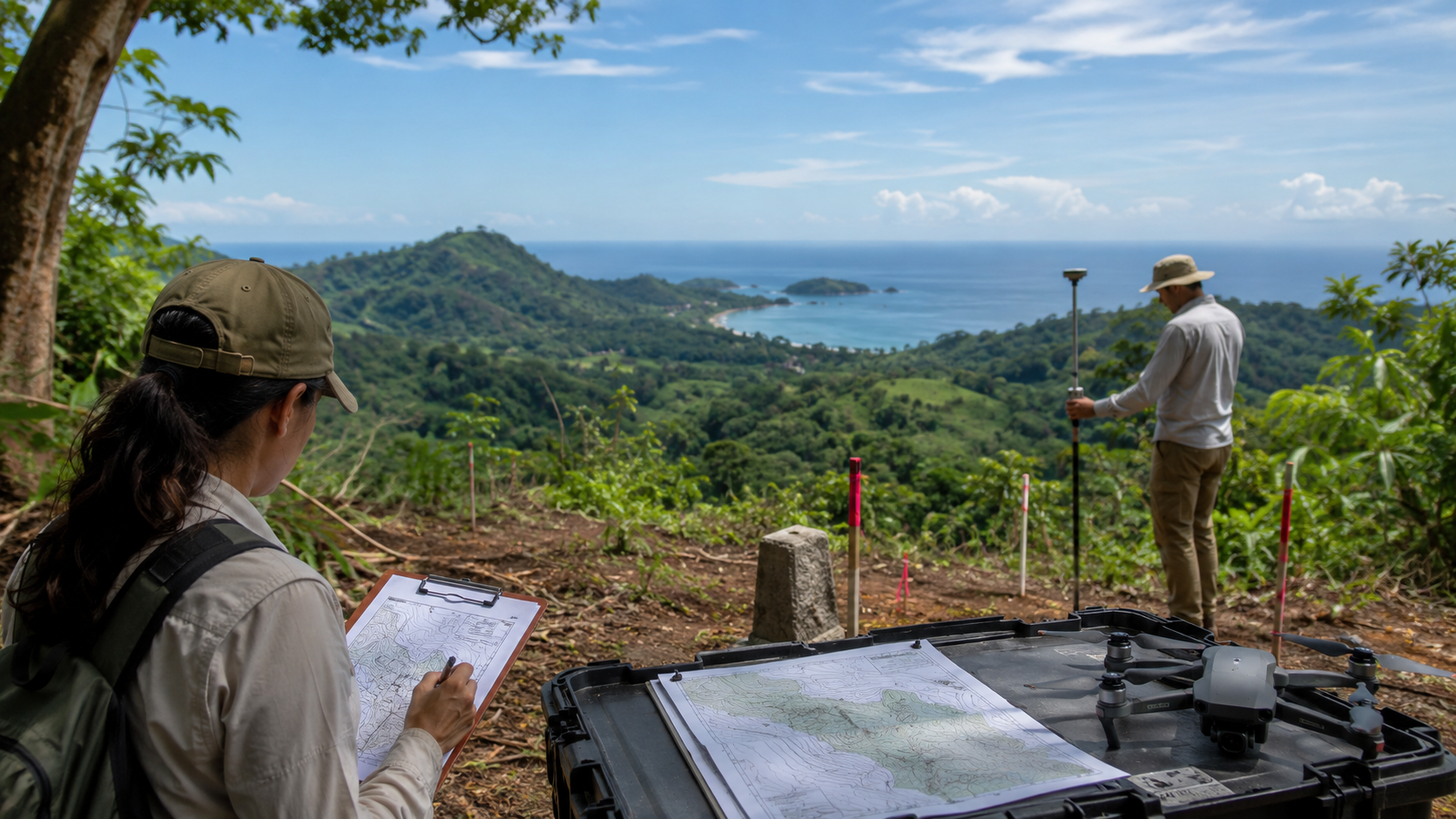
When boundaries, terrain, land use or development potential are material to the purchase, the legal review may need targeted input from independent licensed professionals. Learn how our Costa Rica real estate legal due diligence service coordinates those inputs through one lawyer-led property strategy.

Key Aspects Reviewed During Due Diligence
Title Review: We verify the registered owner of the property and review whether there are liens, mortgages, annotations, easements, judicial claims, limitations, or other encumbrances affecting the title.
Cadastral Plan Verification: We review whether the cadastral plan corresponds with the registered property and whether there are potential inconsistencies regarding boundaries, measurements, access, or neighboring properties.
Zoning and Land Use: We review whether the intended use of the property is compatible with municipal zoning, land use regulations, and applicable restrictions.
Legal Access and Public Services: We assess whether the property has legal access and whether essential services such as water, electricity, and sewage are available or legally feasible.
Municipal Taxes and Local Obligations: We verify whether municipal taxes and related local obligations are up to date.
Homeowners’ Association or Condominium Review: For properties located within a condominium, gated community, or private development, we review relevant regulations, fees, obligations, restrictions, and governance documents.
Environmental Consideration: We assess whether the property may be affected by environmental restrictions, protected areas, coastal zone regulations, forest limitations, water setbacks, or other environmental issues.
Pending Litigation or Claims: We review whether the property is affected by disputes, annotations, administrative proceedings, or judicial claims that could compromise the acquisition.
Construction Permits and Regulatory Compliance: When applicable, we review the legal status of existing structures, construction permits, municipal authorizations, and other regulatory requirements.
Insurance and Risk Review: When relevant, we evaluate whether existing insurance coverage, prior claims, or risk-related issues should be considered before closing.
Expected Outcomes
The due diligence process should provide the buyer with:A clearer understanding of whether the purchase should proceed.Identification of legal, cadastral, municipal, environmental, or structural limitations.Objective elements that may support renegotiating the transaction.Identification of valid reasons to request corrections, conditions, guarantees, or withdrawal from the transaction.A structured legal path toward closing, if the buyer decides to proceed.
Timeline
The due diligence timeline can go from 15 - 90 days; it depends on the complexity of the property, the responsiveness of third parties, the availability of documentation, and whether technical reviews are required. In most cases, the process should be planned with enough time to properly review the legal and technical condition of the property before the buyer becomes fully committed to the transaction.

Purchase Closing and Registration
If the due diligence process confirms that the transaction may proceed, the purchase is formalized through a public deed before a Costa Rican Notary Public.The closing process typically includes:Preparation of the purchase deed.Verification of the parties’ legal capacity.Review of corporate authorizations, if applicable.Coordination with escrow, banks, agents, or other parties.Execution of closing documents.Submission of the deed before the National Registry.Follow-up until registration is completed.Once the deed is registered, the buyer becomes the registered legal owner of the property.
Third Party Professionals
Certain transactions may require the involvement of external professionals, depending on the nature of the property and the risks identified. These may include:Topographers or cadastral surveyors; Engineers; Home inspectors; Environmental consultants; Escrow companies; Architects; Technical specialists. These services are coordinated as needed and quoted separately by the relevant professionals.
Why Legal Due Diligence Matters
Real estate transactions in Costa Rica require careful legal review. A property may appear attractive from a commercial perspective but still present legal risks that are not visible at first glance.A proper due diligence process helps protect the buyer by identifying risks before closing, clarifying the legal condition of the property, and creating a structured path for negotiation, correction, or acquisition.
At Simple Legal Consulting, our objective is to help clients invest in Costa Rica with clarity, strategy, and legal certainty.
Contact Us
If you are considering buying property in Costa Rica, we can assist you with the legal due diligence, transaction structuring, and closing coordination required to move forward with confidence.